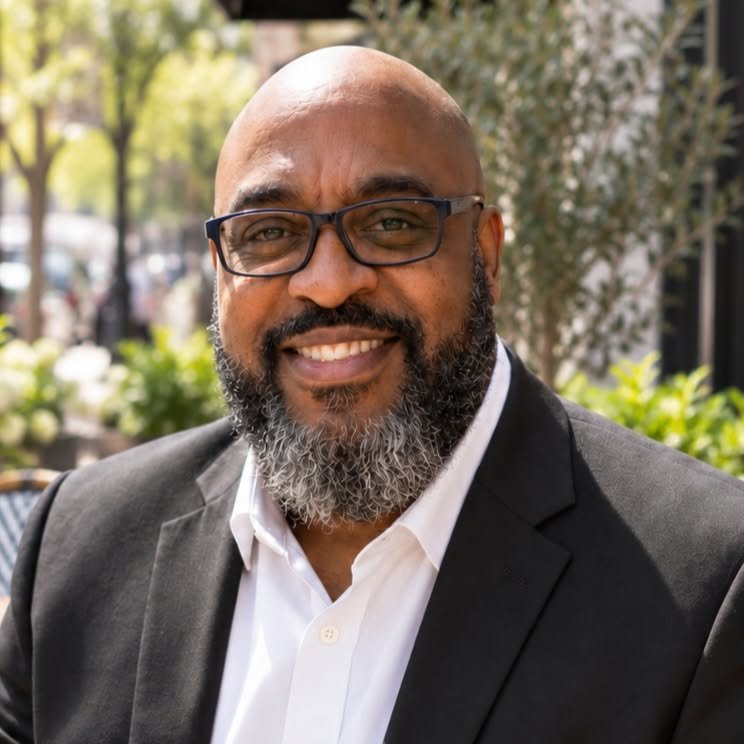
The short version.
I am a Marine Corps veteran with twenty-three years of active service, a doctorate from USC Rossier in Organizational Change and Leadership, and a current research focus on AI readiness in education and workforce systems. I teach project management at UC Irvine's Division of Continuing Education, publish weekly at What Time Binds, and consult independently with districts, colleges, and workforce-affiliated organizations.
What I actually do.
The through-line of my work is meaning repair: the practical work of detecting and correcting the small misalignments in shared language that quietly destabilize team coordination. The working framework I use synthesizes research from conversation analysis, team cognition, psychological safety, high-reliability organizations, sensemaking, and four other academic traditions into four phases: drift, suppression, repair activation, and outcome. The full working paper is publicly available on SSRN.
The framework holds across military operations, hospital teams, software incident response, organizational change, and classroom rollouts. Right now, AI integration is the highest-stakes test case for most of the organizations I work with. Districts, colleges, and workforce systems are adopting AI tools faster than they can build shared language around them, and the cost of that drift is already showing up in policy decisions, governance documents, and team coordination.
The independent practice translates the framework into engagements. The diagnostic finds where meaning is breaking down. The workshop installs a working response. The retainer keeps both current as the situation evolves.
How I got here.
I joined the Marine Corps in 1993 as a combat engineer and retired as a Master Sergeant in 2016 after multiple deployments and a final operational role overseeing 300+ facilities, 3 million square feet of infrastructure, and 4,600 personnel across 30 locations in four countries. I learned how teams hold together under extreme conditions — and what makes them fall apart.
After retirement I moved into corporate facilities and business continuity work. In 2018 I co-designed the alternate worksite plan that allowed my company to send all employees home in one week when the pandemic hit, with no operational downtime. That work taught me that organizational change happens in language before it happens in policy — and if the language drifts, the change fails.
The doctorate came in 2023. The dissertation studied teacher self-efficacy in media literacy education and closed with a formal recommendation: future research had to investigate the impact of generative AI on media literacy practice. I started that work the same year. Two SSRN papers in 2023, one on AI and writer self-efficacy and one on AI and media literacy education, answered the recommendation directly. The book on generative AI followed in late 2023. In 2024 I built What Time Binds as the editorial home for my own research; weekly publishing started in 2025. That same year I co-founded BoldTimers with María Tomás-Keegan and Mel Ebenstein, and presented research on technological stewardship with my brother Tony at the University of Oxford Research Ethics Colloquium. The independent practice is the next move: applying everything I know about teams under pressure to the AI moment.
Selected timeline.
What this practice is for.
I built this independently because the work is needed and the institutional path is slow. Districts, colleges, and workforce systems are making AI decisions right now. The decisions are being made by people who are stretched thin, working from incomplete information, and trying not to break what's already working. They need outside thinking that is fast, grounded, and respectful of the seriousness of their job.
That is what this practice exists to do.